
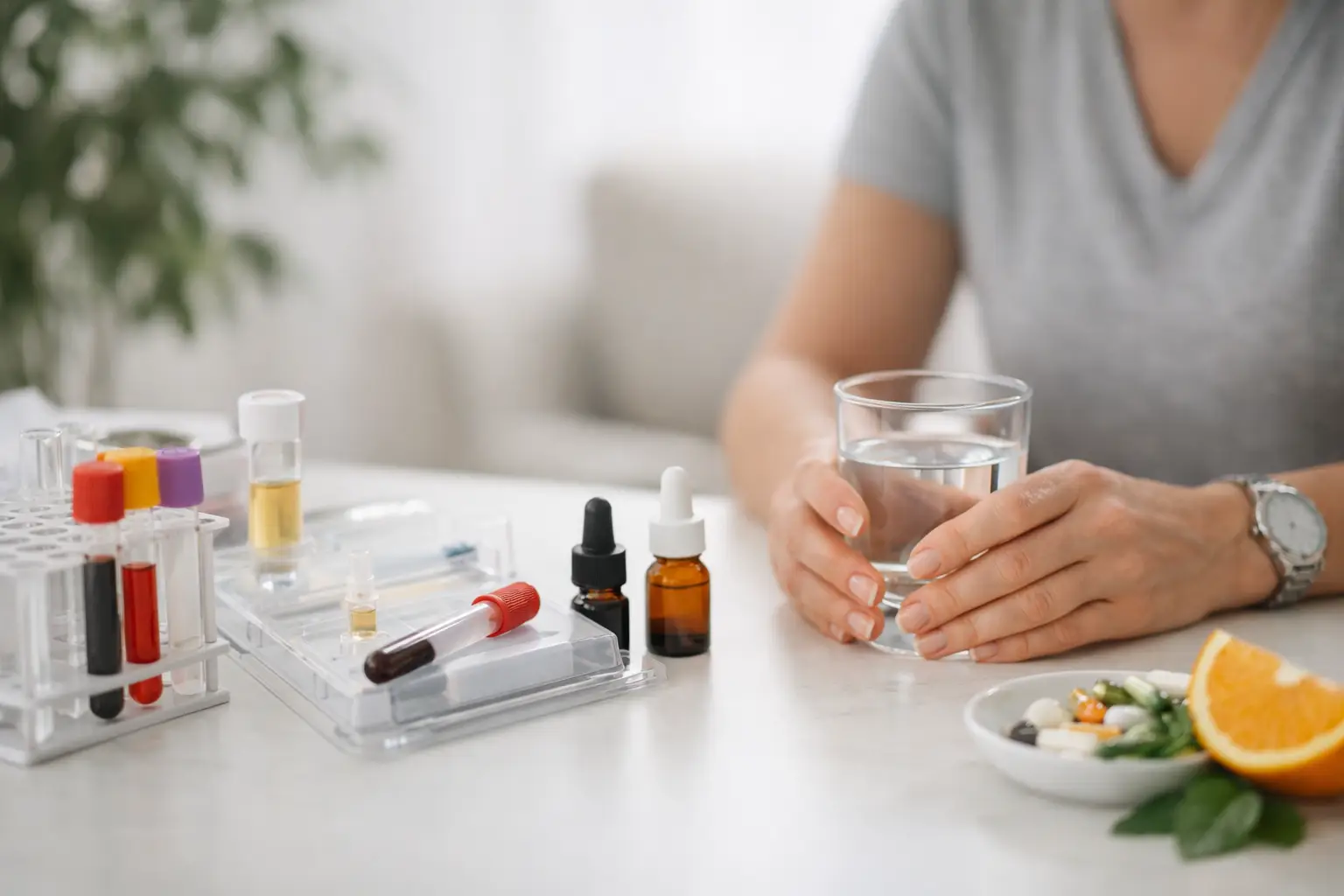
A hormone test can look straightforward: have blood drawn, wait for results, review the numbers. But hormones change in response to sleep, stress, meals, exercise, medications, illness, and, for many women, the point in the menstrual cycle. Following the right hormone testing preparation steps helps create a clearer picture of what may be contributing to fatigue, weight resistance, mood changes, low libido, poor recovery, irregular cycles, or changes in strength and focus.
The goal is not to achieve a “perfect” lab result. It is to make sure your results reflect your usual physiology as accurately as possible, so your provider can interpret them alongside your symptoms, health history, and broader wellness goals.
Why preparation can change hormone test results
Hormone levels are dynamic rather than fixed. Testosterone is often highest in the morning. Cortisol follows a daily rhythm and can rise after a poor night of sleep, acute stress, or strenuous training. Insulin and blood glucose are influenced by recent food intake, while thyroid values can be affected by certain supplements and medications.
That does not mean one disrupted night or a stressful morning makes testing useless. It means the context matters. A comprehensive assessment accounts for what was happening in your body when the sample was collected instead of treating one number as a complete diagnosis.
Preparation also helps avoid unnecessary repeat testing. When timing, fasting instructions, supplements, and medication use are documented correctly, your care team can compare future labs more confidently and identify meaningful patterns over time.
Hormone testing preparation steps before your visit
Your provider should give you instructions specific to the tests being ordered. A hormone evaluation may include sex hormones, thyroid markers, cortisol, glucose and insulin markers, or other labs based on your symptoms. The right preparation is not identical for every panel.
Confirm whether you need to fast
Some hormone tests do not require fasting. However, if your evaluation also includes glucose, insulin, cholesterol, or other metabolic markers, you may be asked to fast for eight to 12 hours. In most cases, plain water is appropriate and can make the blood draw easier.
Do not assume fasting is required simply because blood work is planned. Fasting unnecessarily can be difficult for people with certain medical conditions, and it may not be appropriate for everyone. Confirm the instructions with your ordering provider, especially if you have diabetes, take blood sugar medication, are pregnant, or have a history of fainting with blood draws.
Schedule testing at the right time of day
Morning testing is commonly recommended for testosterone and cortisol because these hormones follow predictable daily patterns. If your provider requests an early draw, aim to complete it within the recommended window rather than scheduling around convenience alone.
Consistency matters for follow-up labs as well. If your first testosterone test is collected at 8 a.m., a future sample taken late in the afternoon may not be directly comparable. This is particularly relevant when monitoring a personalized hormone support plan.
Consider menstrual-cycle timing
For women who are still having menstrual periods, the timing of hormone testing can affect estradiol, progesterone, follicle-stimulating hormone, luteinizing hormone, and other values. Depending on the clinical question, your provider may want labs during the early part of the cycle, near ovulation, or during the luteal phase after ovulation.
There is no universally correct “day 21” test. Cycle length, regularity, contraceptive use, perimenopause symptoms, and the reason for testing all matter. If your cycles are irregular or you are unsure when your last period began, share that information rather than trying to estimate. It gives your provider useful context for interpreting the results.
Review medications and supplements in advance
Bring a complete list of prescriptions, over-the-counter products, vitamins, herbs, and performance supplements. Thyroid medication, hormonal birth control, testosterone therapy, estrogen, progesterone, corticosteroids, DHEA, biotin, and some fertility medications can all influence results or their interpretation.
Do not stop a prescription medication or hormone treatment on your own before testing. Your provider may ask you to adjust the timing of a dose, temporarily hold a specific supplement, or continue your routine exactly as prescribed. Those decisions should be individualized, particularly for thyroid, psychiatric, diabetes, and hormone medications.
Biotin deserves special attention. It is commonly found in hair, skin, and nail supplements and can interfere with certain lab assays, including some thyroid tests. Ask your provider whether you should pause it before your blood draw and for how long.
Keep the day before testing relatively typical
You do not need to eliminate every stressor or avoid normal activity. Still, an unusually intense workout, heavy alcohol use, severe sleep loss, dehydration, or an all-night shift can temporarily affect several hormone and metabolic markers. If possible, choose a testing day that follows a reasonably normal routine.
Aim for adequate sleep, drink water, and avoid adding a new supplement or extreme diet change immediately before testing. If you are sick, have a fever, recently had surgery, or are recovering from a significant infection, contact your provider. Acute illness can shift hormone and inflammation-related results, and it may be better to postpone nonurgent testing.
What to tell your provider before hormone testing
Lab values are most useful when they are connected to your lived experience. Before your appointment, take note of when symptoms began, whether they are constant or cyclical, and what makes them better or worse. Include changes in sleep, mood, energy, body composition, sexual health, menstrual patterns, headaches, digestion, pain, and exercise recovery.
It can also help to mention recent life changes such as pregnancy, postpartum recovery, a new job schedule, major stress, travel across time zones, changes in diet, or a new medication. These details are not distractions. They may help identify root contributors that a lab value alone cannot explain.
For example, low energy may relate to sex hormones, thyroid function, glucose regulation, nutrient status, chronic pain, sleep disruption, depression, medication effects, or more than one of these factors. A coordinated strategy looks beyond one isolated result and considers how these systems may overlap.
The morning of your blood draw
Follow your fasting instructions, drink water if permitted, and take only the medications your provider has instructed you to take. Arrive a few minutes early so you are not rushing in from the parking lot. If you feel anxious about blood draws, let the staff know. Sitting quietly for a short period before collection can be helpful, and your care team can make the experience more comfortable.
If you accidentally ate, took a supplement you were meant to hold, exercised intensely, or forgot an instruction, be honest. The test may still be appropriate to complete, but the information should be recorded so results are not interpreted without context.
Results need interpretation, not guesswork
A lab reference range is a useful clinical tool, but it is not a personalized treatment plan. A result can fall within range while still requiring closer evaluation when symptoms, medical history, medication use, and related markers point to a larger pattern. The reverse can also be true: a mildly abnormal value may be temporary, expected for a specific life stage, or worth repeating before making changes.
At Quad Cities Integrative Wellness, hormone concerns can be reviewed as part of a broader picture that may include mental health, pain and mobility, metabolic function, recovery, and lifestyle factors. That connected view is especially valuable when persistent symptoms have not fit neatly into a single specialty or a single lab result.
Thoughtful preparation gives your testing a stronger starting point. Share the full context, follow the instructions tailored to your panel, and use the results as one part of a clear, personalized conversation about what your body may need next.