
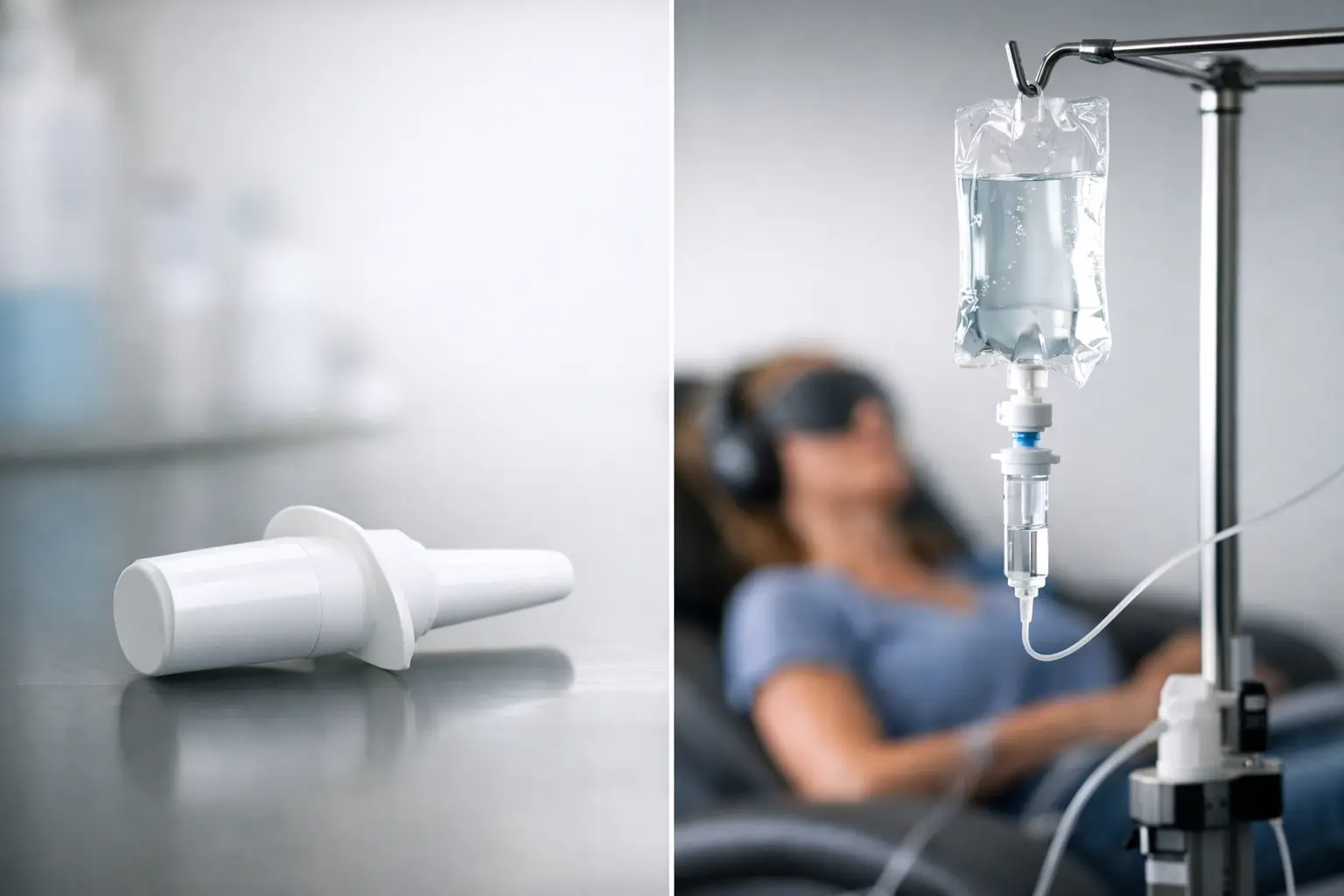
When depression has persisted through standard medication, the question is rarely just, “What treatment is available?” It is, “What approach fits my symptoms, health history, safety needs, and daily life?” In the conversation around Spravato vs ketamine therapy, both options may offer a different pathway for people with difficult-to-treat depression, but they are not interchangeable.
Both treatments affect glutamate signaling, a brain system involved in mood, learning, and neural adaptability. Yet they differ in medication formulation, FDA approval status, setting, monitoring requirements, insurance coverage, and the clinical evidence supporting specific uses. A thoughtful decision starts with a comprehensive assessment, not a one-size-fits-all recommendation.
Spravato vs Ketamine Therapy: The Core Difference
Spravato is the brand name for esketamine, a form of ketamine delivered as a nasal spray. It is FDA-approved for adults with treatment-resistant depression and for depressive symptoms in adults with major depressive disorder accompanied by acute suicidal ideation or behavior, when used alongside an oral antidepressant. Treatment occurs in a certified healthcare setting under a required safety program called REMS.
Ketamine therapy generally refers to racemic ketamine, which contains two mirror-image forms of the medication, including esketamine. Ketamine has long been used as an anesthetic. In mental health care, it is commonly provided off-label, most often through intravenous infusions. Some providers also offer intramuscular, oral, or sublingual forms, though treatment protocols, absorption, monitoring, and evidence can differ substantially across delivery methods.
The practical distinction is straightforward: Spravato is an FDA-approved nasal medication with a standardized, regulated treatment structure. Ketamine therapy is broader and more variable, with IV ketamine often used off-label for depression and, in some settings, chronic pain or other conditions. Neither should be viewed as a casual or stand-alone wellness service. Both require medical screening, appropriate monitoring, and ongoing psychiatric support.
How Treatment Delivery Changes the Experience
Spravato is self-administered as a nasal spray while a trained clinician observes the process. Patients remain at the treatment center for at least two hours afterward because the medication can cause sedation, dissociation, blood pressure changes, dizziness, nausea, and impaired attention. Patients cannot drive or operate machinery until the next day after a restful night’s sleep, so transportation home must be arranged.
A common Spravato schedule begins with twice-weekly sessions for four weeks, followed by weekly sessions and then less frequent maintenance visits based on response and clinical need. The exact plan may change as symptoms improve, plateau, or return.
IV ketamine is administered through a vein over a controlled period, often in a series of sessions. This route allows the provider to adjust the dose more precisely and produces a highly predictable onset. Patients are monitored during and after treatment, and they also need a ride home. Other ketamine forms may be more convenient, but convenience should not replace safeguards. The quality of assessment, medical oversight, and follow-up matters as much as the medication route.
For someone balancing work, caregiving, or limited transportation, the logistics can be a meaningful part of the decision. Both options require protected time, post-treatment recovery, and a plan for safe transportation. A care team should discuss these realities before treatment begins rather than after a patient has committed to a protocol.
Who May Be a Candidate?
Spravato is generally considered for adults with treatment-resistant depression, meaning depression that has not improved adequately after trying appropriate antidepressant medications. Eligibility also depends on diagnosis, current medications, medical history, blood pressure stability, substance use history, and the ability to participate in required in-clinic monitoring.
Ketamine therapy may be considered when depression has been persistent, severe, or inadequately responsive to conventional treatment. Some people pursue it because they need a different mechanism of action than standard antidepressants. In certain clinical settings, ketamine may also be evaluated as part of a broader strategy for chronic pain, though mental health and pain protocols are not the same and should not be treated as such.
Neither option is right for every person with depression. Uncontrolled high blood pressure, certain vascular conditions, active psychosis, mania, pregnancy considerations, or a history of problematic substance use may require additional caution or make treatment inappropriate. Dissociation can also be unsettling for some patients, even when it is temporary and expected.
A qualified prescriber should review prior medication trials, therapy history, mood patterns, trauma exposure, sleep, pain, hormone concerns, substance use, current medical conditions, and family support. This broader review matters because symptoms that look like treatment-resistant depression can be intensified by chronic pain, poor sleep, thyroid dysfunction, nutritional deficiencies, trauma-related symptoms, medication side effects, or untreated anxiety.
Effectiveness: Fast Relief Is Not the Same as Lasting Recovery
One reason people ask about these treatments is the potential for rapid symptom improvement. Some patients report relief sooner than they experienced with traditional antidepressants, which can take several weeks to show meaningful benefit. That possibility is significant, particularly when depressive symptoms are severely affecting work, relationships, safety, or daily function.
Still, response is individual. Some patients experience a clear reduction in depressive symptoms, while others have a partial response or no meaningful improvement. A short-term lift in mood does not automatically resolve the root contributors to depression or create durable recovery.
That is why treatment should be paired with a coordinated strategy. Therapy can help patients process emotions, build coping skills, and make use of the mental flexibility that may follow treatment. Psychiatric follow-up helps guide medication decisions and monitor symptoms. For patients dealing with chronic pain, fatigue, metabolic concerns, or sleep disruption, addressing physical contributors may also support better mental health outcomes.
The goal is not simply to complete a series of sessions. It is to improve functioning, reduce symptom burden, and build a plan that remains useful between treatments and over time.
Cost and Insurance Considerations
Spravato may be covered by many insurance plans when a patient meets medical criteria and the treatment is provided through an authorized program. Coverage still varies by plan, deductible, prior authorization requirements, and the details of the diagnosis and medication history. The monitoring visit and oral antidepressant plan can also affect the overall process.
IV ketamine for depression is typically off-label and is often not covered by insurance. Patients may pay out of pocket for an initial series and later maintenance sessions. Other forms of ketamine can have different pricing, but lower upfront cost should not be the only deciding factor. Patients should ask what the treatment fee includes, how emergencies are managed, who provides medical oversight, and what follow-up support is available.
A responsible clinic will be transparent about expected costs and will not promise a specific outcome. Financial planning is part of informed consent, especially because some patients need ongoing maintenance care rather than a single treatment series.
Questions Worth Asking Before You Choose
Before deciding between Spravato and ketamine therapy, ask how the provider determines candidacy, what diagnosis and prior treatment history are required, and how progress will be measured. Ask who is present during treatment, how blood pressure and side effects are monitored, and what happens if symptoms worsen.
It is also reasonable to ask how the treatment fits with psychotherapy, antidepressant management, sleep support, pain care, and lifestyle factors that influence mood. If you have multiple concerns, fragmented care can make it harder to see what is helping and what needs adjustment.
At Quad Cities Integrative Wellness, coordinated assessment can help connect psychiatric symptoms with physical pain, mobility limitations, fatigue, hormonal concerns, and recovery needs. For patients who qualify for specialty treatment through a co-located partner clinic, that connected model supports clearer communication and a more complete care plan.
Choosing the Right Next Step
Spravato may be the better fit for someone who wants an FDA-approved option for treatment-resistant depression and may have insurance coverage. IV ketamine may be considered when a clinician believes its delivery method, treatment approach, and level of individualization align better with a patient’s needs. The right answer depends on more than a medication comparison.
If depression has remained in place despite real effort, you do not need to sort through the options alone. A comprehensive consultation can clarify what has already been tried, identify root contributors that may be keeping symptoms active, and create a coordinated strategy that supports both immediate relief and a more sustainable path forward.